Disability Rights NZ
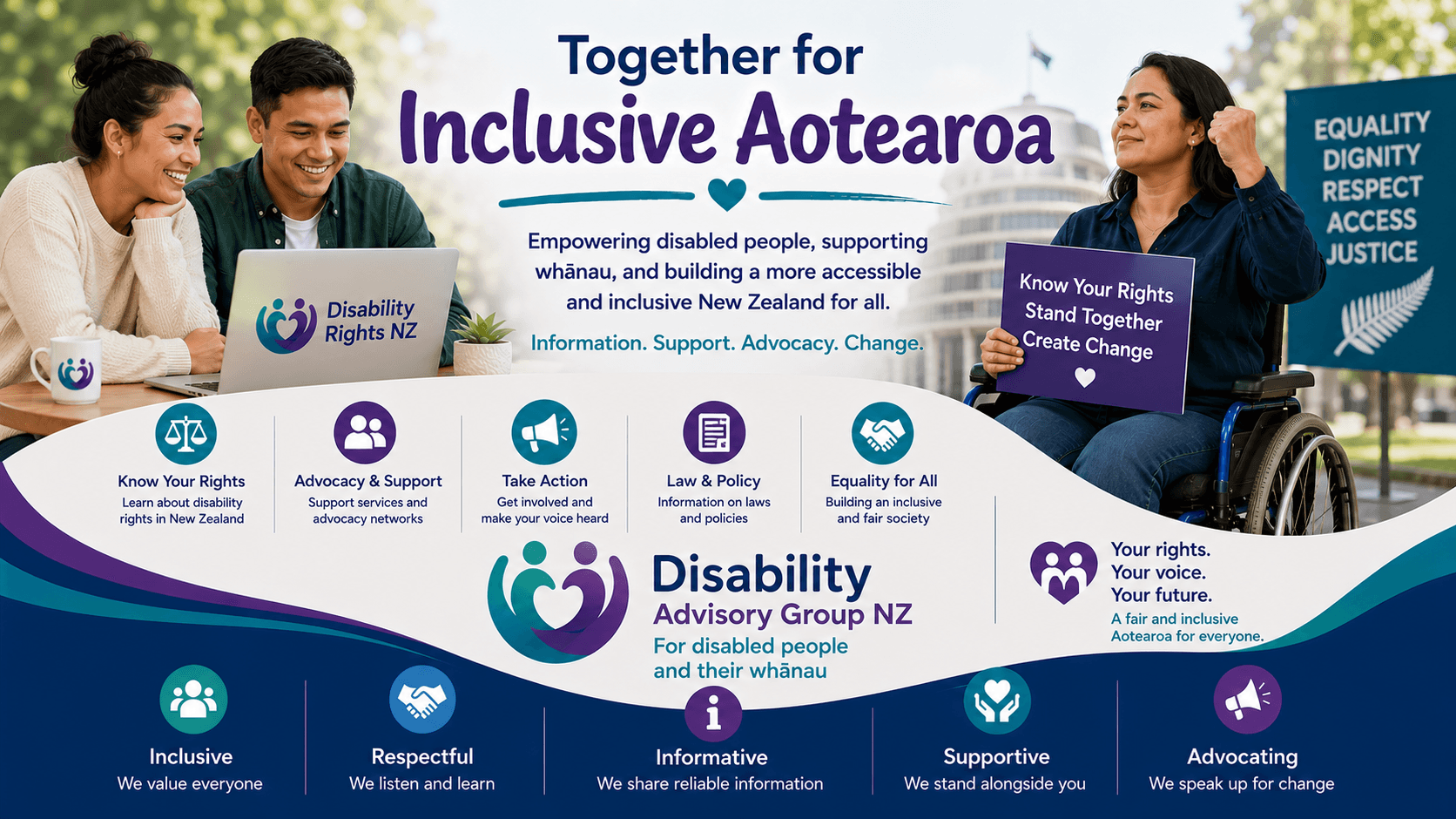
Disabled people have the same human rights and freedoms as everyone else. Disability rights are not special rights. They are fundamental human rights that recognise the dignity, equality and participation of disabled people in all aspects of life.
In New Zealand, disability rights are protected through a combination of legislation, human rights frameworks and international agreements. These rights help ensure disabled people can participate in education, employment, housing, healthcare, transport, recreation and community life without discrimination.
The United Nations Disability Convention
One of the most important disability rights frameworks is the United Nations Convention on the Rights of Persons with Disabilities (UNCRPD). New Zealand signed the Convention in 2007 and ratified it in 2008, committing to promote, protect and fulfil the rights of disabled people.
The Convention does not create new rights. Instead, it explains how existing human rights apply to disabled people and outlines what governments should do to remove barriers and promote inclusion. Areas covered include accessibility, education, employment, health, housing, justice, political participation and independent living.
The Right to Inclusion
Disabled people have the right to participate fully in society. This includes the right to attend school, work, use public facilities, access information, travel, vote, participate in community activities and make decisions about their own lives.
Many barriers still exist, including inaccessible buildings, transport systems, websites, communication methods and public spaces. Disability rights seek to remove these barriers and ensure equal opportunities for everyone. The New Zealand Disability Strategy is based on the social model of disability, which recognises that barriers within society often create disability rather than a person's impairment alone.
Nothing About Us Without Us
A key principle of the disability rights movement is "Nothing About Us Without Us." This means disabled people should be actively involved in decisions, policies and services that affect their lives.
Disabled people bring valuable lived experience and expertise. Their voices are essential when designing services, developing policies and creating accessible communities. Effective disability rights are achieved when disabled people are partners in decision-making rather than passive recipients of support.
Monitoring Disability Rights in New Zealand
New Zealand has established systems to promote, protect and monitor disability rights under the UNCRPD. This includes government agencies, independent monitoring organisations and disabled people's organisations working together to assess progress and identify areas where improvements are needed.
Regular reporting to the United Nations helps measure New Zealand's progress. In 2025 the Government adopted a number of recommendations from the United Nations Committee on the Rights of Persons with Disabilities as part of ongoing efforts to improve outcomes for disabled people.
Advocacy and Speaking Up
Understanding your rights is an important step towards self-advocacy. Advocacy can involve asking questions, requesting reasonable accommodations, raising concerns about accessibility, challenging discrimination or supporting wider community change.
Many advocacy organisations throughout New Zealand provide information, support and guidance to help disabled people understand their rights and navigate systems. Advocacy is often most effective when people have access to clear information and strong community support.
Building an Inclusive Future
Disability rights are about more than laws and policies. They are about creating a society where disabled people can live, learn, work and participate on an equal basis with others. Accessibility, inclusion, respect and dignity should be part of every community, workplace, school and public space.
This page will continue to feature disability rights news, legal updates, advocacy information, policy developments and resources to help disabled people, families, whānau, carers and organisations stay informed about disability rights in New Zealand.
Disability Issues and the New Zealand Election 2026
Government decisions have a direct impact on disability support services, accessibility, income, healthcare, employment and the rights of disabled New Zealanders. Inclusive World New Zealand has created an independent Elections 2026 resource to help disabled people, families, whānau, advocates and support organisations stay informed.
Disability Support Services
Follow proposed changes to disability support services and learn how legislation and government decisions may affect disabled people, families, carers and service providers.
View Support Service ChangesPolitical Party Disability Policies
Compare the disability-related policies published by New Zealand political parties and follow updates as new election commitments are announced.
Compare Disability PoliciesRights and Government Accountability
Explore issues involving disability rights, consultation, transparency, public accountability and the responsibility of government to include disabled people in decisions.
Explore Rights and AccountabilityElection News and Updates
Keep up to date with election announcements, disability policy developments, sector responses and issues affecting disabled New Zealanders.
Read Election UpdatesVisit the complete Elections 2026 disability information hub for political party policies, community opinions, legislation updates, sector statements and opportunities to share lived experience.
Explore the Elections 2026 Disability Resource