Disability Advocacy NZ
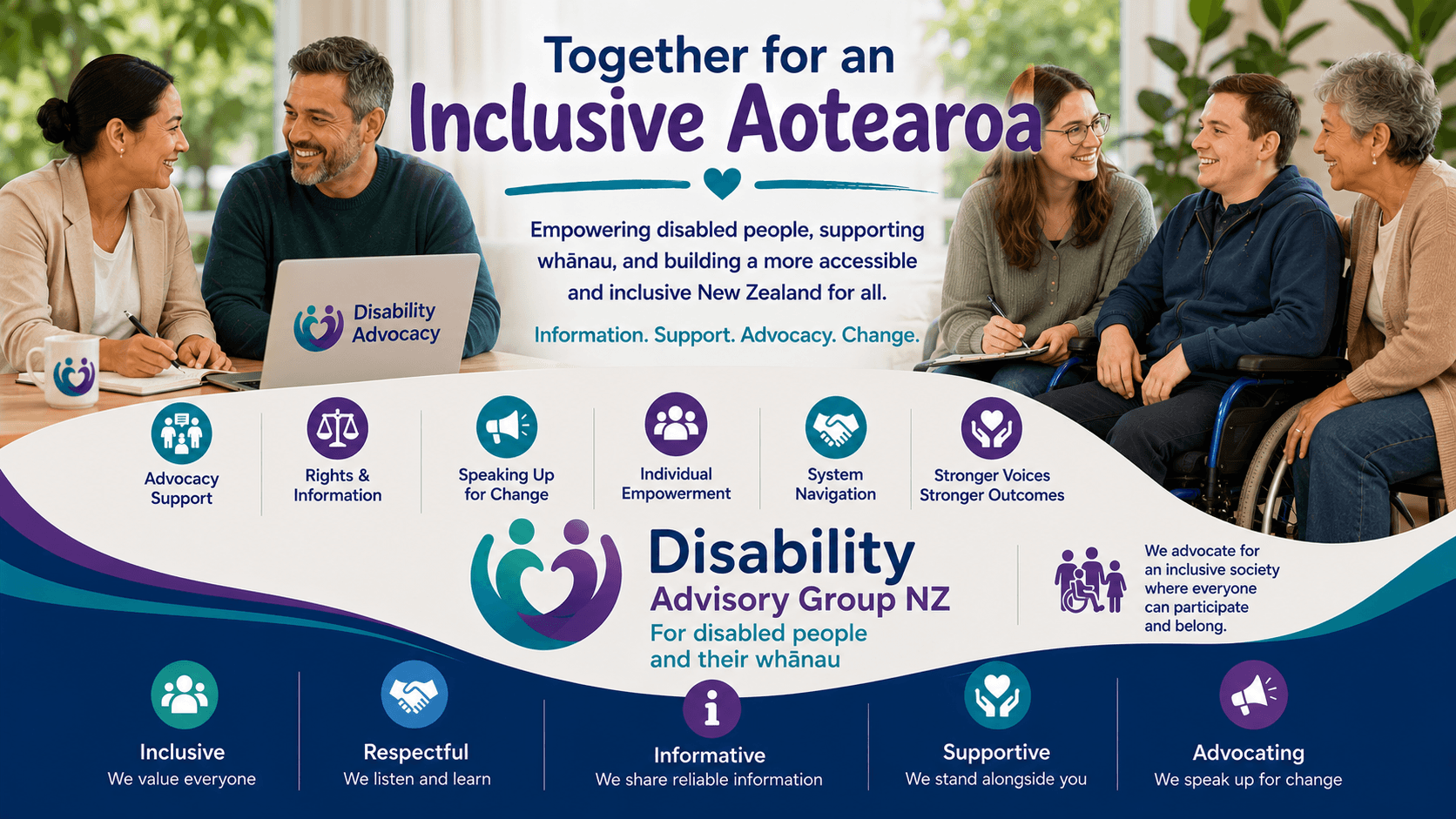
Disability advocacy is about ensuring disabled people have a voice, are treated fairly and can exercise their rights. Advocates help people understand their options, access services, resolve problems and participate in decisions that affect their lives.
Advocacy can be provided by individuals, community organisations, disabled people's organisations, legal services and specialist advocacy groups. Some people advocate for themselves, while others choose to have support from an independent advocate, family member, friend or professional organisation. Advocacy helps ensure that disabled people are heard and respected.
What Does an Advocate Do?
An advocate's role is to support people to express their views, understand their rights and make informed decisions. Advocacy is not about making decisions for someone. It is about helping people speak for themselves and ensuring their wishes and preferences are understood.
Advocates may help people prepare for meetings, understand funding decisions, resolve disputes, navigate government systems, access support services or raise concerns about accessibility, discrimination or service delivery.
Self-Advocacy
Self-advocacy is an important part of disability rights. It means speaking up for yourself, making choices about your own life and communicating what is important to you. Many disabled people are strong self-advocates and play an active role in shaping services, policies and community initiatives.
Learning about your rights, understanding available supports and developing confidence to ask questions are all important parts of self-advocacy. Access to information helps people make decisions and participate more fully in society.
Nothing About Us Without Us
A key principle of disability advocacy is "Nothing About Us Without Us." This principle recognises that disabled people should be involved in decisions, policies, programmes and services that affect their lives.
Across New Zealand, disabled people's organisations advocate for system-wide improvements in accessibility, inclusion, employment, education, housing, transport and community participation. These organisations ensure lived experience remains at the centre of disability policy and decision-making.
Health and Disability Advocacy
If you have concerns about health or disability services, independent advocacy support is available. The Nationwide Health and Disability Advocacy Service provides free assistance to people who have questions about their rights, concerns about care or wish to make a complaint regarding health or disability services. The service operates independently from service providers and government agencies.
Advocates can help explain the Code of Health and Disability Services Consumers' Rights, discuss available options and support people throughout the complaints process if required.
Legal Advocacy and Disability Rights
Sometimes disability-related issues involve legal rights, discrimination, accessibility barriers or disputes with organisations. In these situations, specialist advocacy and legal services may be available to help people understand their rights and explore potential solutions.
Advocacy plays an important role in ensuring disabled people can access justice, challenge barriers and participate equally in society. Legal advocacy can help people understand their options and take action when necessary.
Advocacy for Families and Whānau
Families and whānau often act as advocates for disabled children, young people and adults. Parents, carers and support people regularly help navigate education systems, health services, funding processes and community programmes.
Strong advocacy can help families access information, secure appropriate supports and ensure disabled people are included in decisions about their lives. Advocacy is often most effective when disabled people, families and support networks work together.
Building Stronger Communities
Advocacy is not only about solving individual problems. It also helps create long-term change. Disability advocacy groups, advisory groups and community organisations work with councils, government agencies, businesses and community organisations to improve accessibility, inclusion and participation across New Zealand.
This page will continue to provide disability advocacy news, resources, success stories, policy updates and information to help disabled people, families, whānau, carers and professionals stay informed and empowered.
Disability Issues and the New Zealand Election 2026
Government decisions have a direct impact on disability support services, accessibility, income, healthcare, employment and the rights of disabled New Zealanders. Inclusive World New Zealand has created an independent Elections 2026 resource to help disabled people, families, whānau, advocates and support organisations stay informed.
Disability Support Services
Follow proposed changes to disability support services and learn how legislation and government decisions may affect disabled people, families, carers and service providers.
View Support Service ChangesPolitical Party Disability Policies
Compare the disability-related policies published by New Zealand political parties and follow updates as new election commitments are announced.
Compare Disability PoliciesRights and Government Accountability
Explore issues involving disability rights, consultation, transparency, public accountability and the responsibility of government to include disabled people in decisions.
Explore Rights and AccountabilityElection News and Updates
Keep up to date with election announcements, disability policy developments, sector responses and issues affecting disabled New Zealanders.
Read Election UpdatesVisit the complete Elections 2026 disability information hub for political party policies, community opinions, legislation updates, sector statements and opportunities to share lived experience.
Explore the Elections 2026 Disability Resource