Accessibility and Inclusion
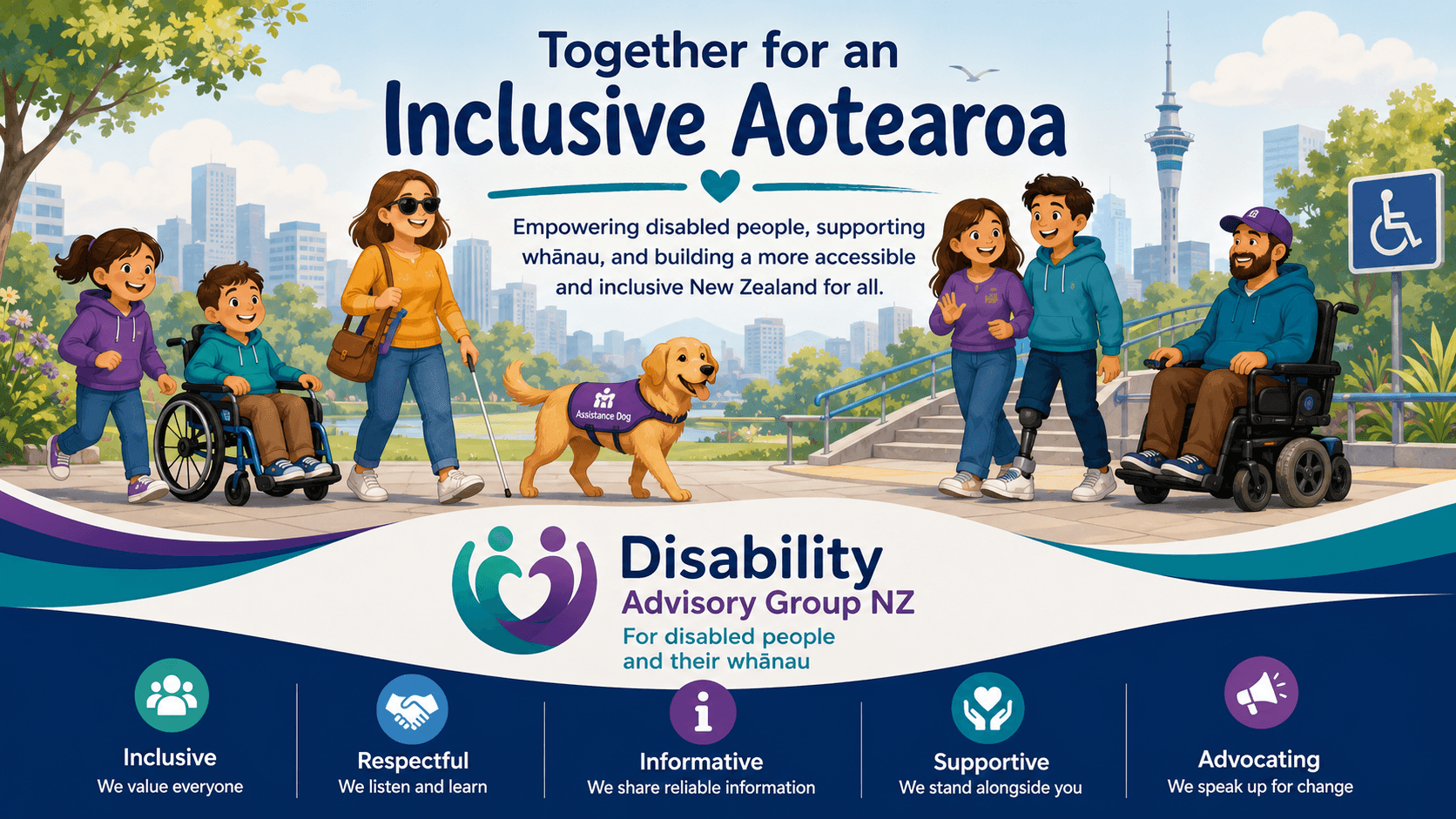
Accessibility and inclusion are closely connected, but they are not the same thing. Accessibility focuses on removing barriers that prevent disabled people from accessing places, services, information, education, employment and community life. Inclusion goes further by ensuring disabled people are welcomed, valued and able to participate as equal members of society. Accessibility creates access, while inclusion creates belonging.
A truly inclusive community is one where disabled people do not have to ask for special treatment simply to participate. Instead, accessibility and inclusion are considered from the beginning when designing buildings, services, websites, programmes and public spaces.
The Social Model of Disability
In New Zealand, disability is commonly viewed through the social model of disability. This model recognises that people are often disabled by barriers within society rather than by their impairment itself. These barriers may be physical, digital, communication-related, attitudinal or systemic.
For example, a wheelchair user may not be disabled by their wheelchair. They may instead be disabled by steps, inaccessible toilets, loose-fill playground surfacing, narrow doorways or inaccessible transport. Removing barriers allows more people to participate independently and fully in everyday life.
Why Accessibility Matters
Accessibility benefits everyone. Features originally designed to improve access for disabled people often make life easier for parents with prams, older people, people recovering from injuries, visitors with limited English and many others.
Accessibility can include ramps, lifts, hearing loops, captions, accessible websites, plain language information, clear signage, accessible playgrounds, assistive technology and inclusive communication methods. When accessibility is built into a project from the beginning, it is usually more effective and more affordable than trying to add it later.
Creating Inclusive Communities
Inclusion means more than simply allowing disabled people to attend. It means creating environments where people feel respected, welcomed and able to contribute. Disabled people should be involved in planning, decision-making and leadership whenever decisions affect their lives.
The principle of "Nothing About Us Without Us" recognises that disabled people are experts in their own experiences. Communities become stronger when people with lived experience help shape the services, facilities and policies that affect them.
Universal Design and Inclusive Design
Universal design and inclusive design encourage products, services and environments to be usable by the widest possible range of people. Rather than designing for the average person, these approaches recognise that people have different abilities, needs and preferences.
Examples include websites that work with screen readers, playgrounds designed for children of all abilities, public buildings with step-free access, accessible transport systems and information available in multiple formats. Good design reduces barriers before they become problems.
Accessibility in Education, Employment and Recreation
Accessibility and inclusion should be part of every aspect of life. This includes schools, workplaces, sports clubs, community groups, parks, events and public facilities. Inclusive environments recognise diversity and adapt to the needs of individuals rather than expecting people to fit into a single system.
Whether it is a student accessing learning, an employee participating in the workplace or a child joining their friends at a playground, inclusion is achieved when barriers are removed and opportunities are available to everyone.
For families, teachers and schools looking for child-friendly inclusion resources, Inclusive Education NZ provides practical learning materials focused on disability awareness, participation and belonging.
Helping Children Learn About Accessibility and Inclusion
Inclusive attitudes can begin early. Children benefit from opportunities to learn about disability, accessibility, difference and belonging in ways that are positive, practical and age-appropriate.
Inclusive Education NZ provides resources that families and schools can use to support these conversations and help children understand why inclusive communities matter.
Disability Awareness
Resources designed to help children understand disability, accessibility and inclusion in positive and respectful ways.
Explore Disability Awareness ↗Everyone Can Play
Inclusive learning resources focused on friendship, participation, shared play and helping children understand that everyone should have the opportunity to belong.
Explore Everyone Can Play ↗Inclusive Classroom Activities
Classroom-focused activities that can support teachers and schools working to create more inclusive learning environments.
Explore Classroom Activities ↗Latest Accessibility and Inclusion News
This page will feature the latest news, research, policy updates, accessibility initiatives and inclusion projects from New Zealand and around the world. Our goal is to help disabled people, families, whānau, educators, employers, community organisations and decision-makers stay informed about developments that support a more accessible and inclusive society.
Together, accessibility and inclusion help create communities where everyone has the opportunity to participate, contribute and belong.