
Families and Whānau
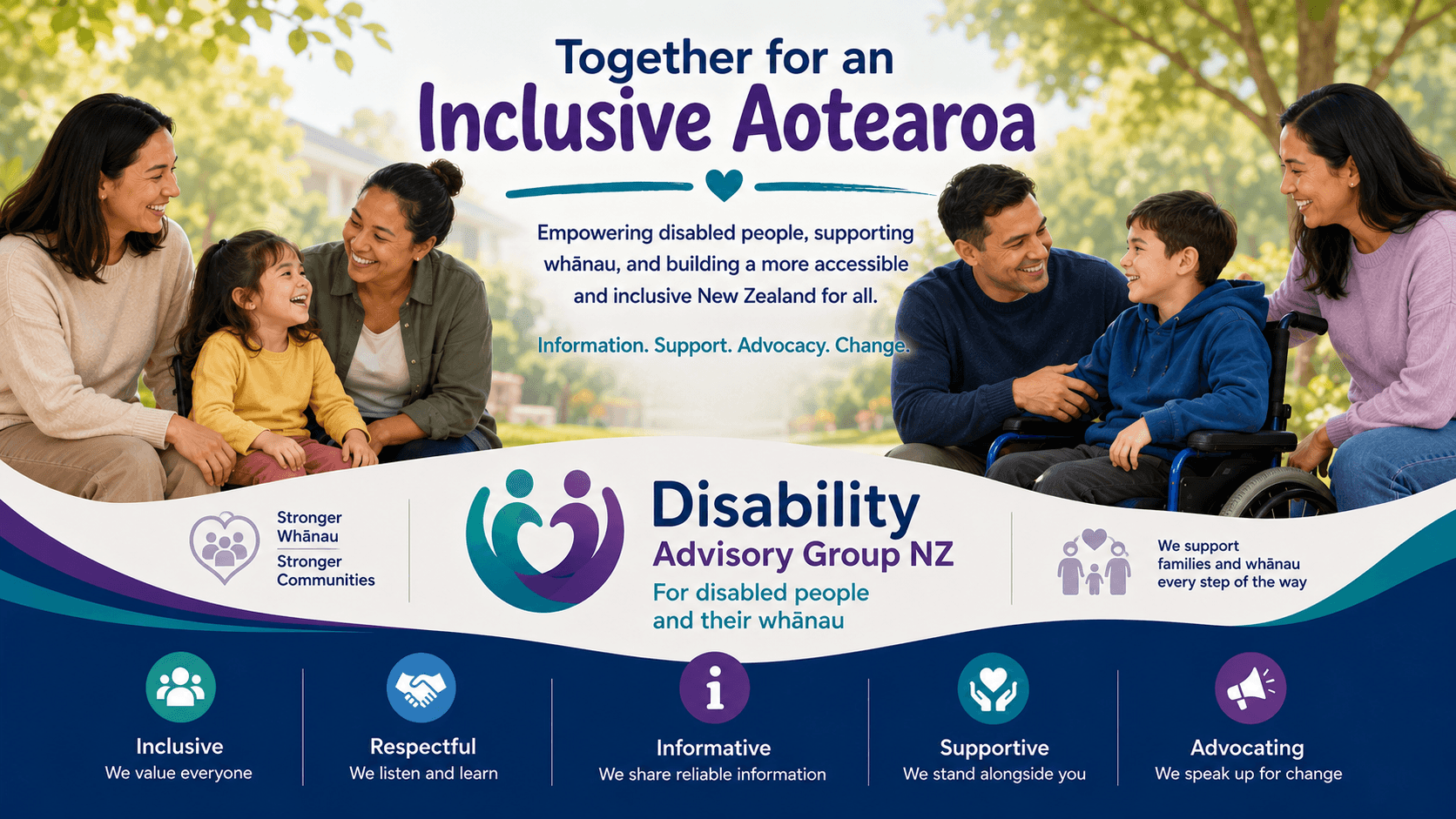
Families and whānau play a vital role in supporting disabled children, young people and adults throughout New Zealand. Behind every disabled person is often a network of parents, siblings, grandparents, partners, carers and friends who provide encouragement, advocacy, practical assistance and emotional support.
While disability services are important, families and whānau are frequently the people who provide the day-to-day care, guidance and support that help disabled people participate in their communities and achieve their goals. This page has been created to provide information, resources and updates that may assist families and whānau on their journey.
Navigating the Disability System
For many families, one of the biggest challenges is understanding how the disability support system works. Funding pathways, assessments, support services and eligibility criteria can sometimes feel overwhelming, especially for those new to the disability community.
Learning about available services, understanding assessment processes and knowing where to seek advice can help families make informed decisions. Access to reliable information often makes it easier to find the support that best meets the needs of both the disabled person and their wider whānau.
Supporting Family Carers
Many family members provide significant unpaid care every day. Caring responsibilities may include personal care, transport, communication support, advocacy, supervision, household tasks, emotional support and coordination of services.
New Zealand offers a range of supports for carers, including Carer Support funding, Individualised Funding options and financial assistance in certain circumstances. Carer Support is designed to help full-time carers take a break from their caring role, while Individualised Funding can provide greater flexibility and choice in how support is arranged.
Children and Young People
Raising a disabled child can bring unique opportunities and challenges. Families often become advocates, educators, coordinators and support workers while also managing everyday family life.
Early intervention services, education support, therapy services, assistive technology and community programmes can all play a role in helping children develop confidence, skills and independence. Access to the right support at the right time can make a significant difference for both children and their families.
Families looking for child-friendly learning and disability awareness resources can also explore Inclusive Education NZ , which provides inclusive resources for children, families, teachers and schools.
Inclusive Resources for Children, Families and Schools
Inclusive Education NZ provides practical, child-friendly resources designed to help children understand disability, inclusion, participation and belonging in positive ways.
These resources can support families at home and can also be useful for teachers, schools and community organisations looking for simple ways to encourage inclusive attitudes from an early age.
Disability Awareness
Resources that help children understand disability, accessibility, difference and inclusion through positive and age-appropriate learning.
Explore Disability Awareness ↗Children’s PDFs
Downloadable inclusive learning resources that parents, carers, teachers and schools can use at home or in the classroom.
Explore Children’s PDFs ↗Everyone Can Play
Resources focused on friendship, participation, belonging and helping children understand that everyone deserves the opportunity to join in.
Explore Everyone Can Play ↗Financial Support and Assistance
Some families may be eligible for financial assistance to help meet the additional costs associated with disability. Support may include the Child Disability Allowance, Supported Living Payment, Disability Allowance, Carer Support and other forms of assistance depending on individual circumstances.
Understanding what support is available can help reduce financial pressure and allow families to focus on what matters most – supporting their loved ones and maintaining family wellbeing.
The Importance of Whānau
Whānau-centred approaches recognise that disability affects more than just the individual. Decisions about support, education, healthcare and community participation often involve the wider family network. Strong whānau connections can provide stability, resilience and practical support throughout life's challenges.
Many successful disability support models focus not only on the disabled person but also on strengthening family and community connections. When families are well supported, disabled people are often better positioned to achieve their goals and participate fully in society.
You Are Not Alone
One of the most important messages for families and whānau is that they are not alone. Across New Zealand, thousands of families share similar experiences, challenges and successes. Support groups, advocacy organisations, community networks and disability services can provide valuable advice, encouragement and connections with others who understand the journey.
This page will continue to grow with news, resources, family support information, funding updates and practical guidance designed to help families and whānau navigate disability support in New Zealand.
- Pacific emergency medical teams strengthen coordination in Auckland
 on September 10, 2026
News article Publication date: 11 September 2026 Emergency health professionals from across the Pacific and wider Western Pacific region gathered in Auckland this week for the 2026 World Health Organization Emergency Medical Team Coordination Cell (EMTCC) training and exercise.Emergency Medical Team Coordination Cell (EMTCC) training and exercise.Hosted by the New Zealand Medical Assistance Team (NZMAT) from the Ministry of Health, the programme ran from 7 to 11 September and brought together participants from Pacific Emergency Medical Teams, Pacific National Emergency Management Offices, the WHO Western Pacific Regional Office, Australia, Japan and the Republic of Korea.The programme supports countries to strengthen emergency medical team coordination before disasters and health emergencies occur. Through practical exercises and scenario-based activities, participants built a shared understanding of coordination arrangements, international response systems, and the relationships needed to work together effectively during an emergency.New Zealand is committed to working alongside Pacific partners to build an emergency response health workforce that is trained, connected and ready to deploy when the next emergency strikes.Dr Junior Ulu, the Ministry of Health’s Director Pacific Health, says strong partnerships are at the heart of emergency preparedness in the Pacific.‘As part of the Pacific family, New Zealand works alongside our neighbours to strengthen preparedness and support one another in times of need. Opportunities like this help build the trusted relationships and shared understanding that are essential during an emergency response.’Emergency Medical Teams are deployable, self-sufficient clinical teams that can provide life-saving care to people affected by health emergencies. They can support local health services that may be overwhelmed following an emergency or major disaster, such as an earthquake, cyclone or significant disease outbreak.NZMAT is New Zealand's Emergency Medical Team. It includes doctors, nurses, pharmacists, physiotherapists, public health staff, paramedics and logisticians who can provide additional capability for local health services both in New Zealand and overseas.As an active participant in the global EMT initiative, NZMAT works closely with the World Health Organization and regional partners, including Australia’s National Critical Care and Trauma Response Centre, to support Pacific EMT capability building.Brendan Stanbury, Manager of NZMAT, says effective coordination is critical during complex emergencies.‘This training provides an opportunity for countries across the region to share experiences, learn from one another, and strengthen professional networks that can support future responses.’Chandra Gilmore, WHO focal point for Emergency Medical Teams in the Pacific, says strengthening coordination capability benefits the entire region.‘The Western Pacific is stronger when countries invest in shared systems, common standards and coordinated emergency medical response capability. The EMTCC works within government structures to help build the connections, skills and relationships needed to effectively coordinate health care delivered by EMTs during emergencies.’As climate-related events, natural disasters and public health emergencies continue to affect countries across the Pacific, programmes like the EMTCC Team Member training and exercise play an important role in building collective preparedness and strengthening the region's ability to respond together.
- Health and Independence Report 2025 released
 on September 4, 2026
News article Publication date: 7 September 2026 The Ministry of Health has published the 2025 Health and Independence Report, providing a comprehensive overview of the health of New Zealanders and the performance of the health system. The report brings together data from across the health system to provide a snapshot of New Zealand’s population, health outcomes, factors that influence health and wellbeing, and the services that support people throughout their lives. The report provides insights into where efforts can be targeted in the future to improve the health of New Zealanders. Director-General of Health, Audrey Sonerson says the report provides valuable insights into both the progress being made and the challenges facing the health system. “It shows that our health system continues to serve many New Zealanders well while also experiencing increased demand for services, driven by changing population needs, health trends, and the wider factors that influence health and wellbeing”. “The findings will help inform decisions across the health sector and support ongoing efforts to improve health outcomes and ensure New Zealanders can access the care they need, both now and in the future". The report is structured into three key sections: People of New Zealand – an overview of New Zealand’s population and how it is changing, including population growth, ageing, diversity, disability, and rural and urban population patterns. Population health – key measures of population health, including health status, leading causes of health loss, non-communicable and communicable diseases, determinants of health and wellbeing, and risk and protective factors. Delivery of health services – information on the delivery of health services, including primary care, hospital and specialist services, emergency care, experience of care, and the health workforce. The Health and Independence Report is published annually and its findings will help guide future planning and investment, and support the Government’s focus on delivering timely, high-quality, patient-centered care. Read the Health and Independence Report 2025
- Two psychiatrists granted approval to prescribe medicinal MDMA for PTSDon September 3, 2026
News article Publication date: 4 September 2026 Medsafe has approved two New Zealand psychiatrists to prescribe pharmaceutical-grade MDMA as part of a treatment programme for eligible adults with post-traumatic stress disorder (PTSD). The approval provides an additional treatment option for people whose symptoms have not responded to conventional therapies. The decision brings New Zealand into line with Australia, where authorised psychiatrists have been able to provide MDMA-assisted psychotherapy for PTSD since 2023. MDMA-assisted psychotherapy combines psychotherapy with the supervised use of pharmaceutical-grade MDMA as part of a broader treatment programme. Treatment takes place in a controlled clinical setting under the care of an authorised psychiatrist and forms part of a comprehensive treatment plan. Patients are not supplied with MDMA to take home. While MDMA contains the same active ingredient found in the illicit drug commonly known as ecstasy, the product used in treatment is manufactured to a pharmaceutical standard and used under strict clinical supervision. A range of safeguards apply to the approvals. Patients must be aged 18 or older and undergo a comprehensive clinical assessment before treatment is considered. Authorised psychiatrists must follow approved therapeutic protocols and make prescribing decisions on a case-by-case basis, supported by informed consent discussions with patients. The treatment is expected to be suitable for only a limited number of people and will be provided within strict clinical protocols. To receive approval, the psychiatrists were required to demonstrate substantial expertise and provide detailed information about how treatment would be delivered safely and appropriately. As part of making this decision, Medsafe carefully considered the balance between enabling innovative new treatments to be available for patients while also ensuring a comprehensive process to protect patients from potential harm. The approval does not mean MDMA has been approved as a medicine in New Zealand. Evidence on its use for PTSD is still emerging internationally, and authorised use remains limited to the two approved psychiatrists. Any other clinician wishing to prescribe MDMA would require their own approval from Medsafe. This follows Medsafe's 2025 approval for a psychiatrist to prescribe medicinal psilocybin for treatment-resistant depression. New Zealand currently has two clinicians approved to prescribe psilocybin and two approved to prescribe MDMA.
- Work continues to strengthen safeguards for pelvic floor careon August 24, 2026
News article Publication date: 25 August 2026 On 23 August 2023 the Director-General of Health endorsed a pause in the use of surgical mesh to treat female stress urinary incontinence (SUI), following a recommendation from the Surgical Mesh Round Table (SMRT). This precautionary measure was taken to reduce harm and ensure patient safety.The Ministry of Health and Health New Zealand acknowledge those who have suffered significant avoidable harm through surgical procedures involving mesh.Four safety conditions must be met before the pause can be reconsidered: mandatory credentialling of clinicians; structured informed consent supported by a patient decision aid; patient case discussion at dedicated stress urinary incontinence multidisciplinary meetings; and establishment of a registry for female pelvic floor procedures.Three conditions have been implemented, while work to establish the Australasian Pelvic Floor Procedure Registry - New Zealand is continuing. Meeting all four conditions is necessary but not sufficient alone to trigger the Surgical Mesh Roundtable (SMRT) to advise the Director-General of Health on the status of the pause; it would not automatically result in the pause being lifted.Since the pause was introduced, the Ministry of Health and Health New Zealand have continued work across the health system to strengthen safeguards, improve transparency, support informed decision-making and respond to recommendations from previous reviews and engagement with women affected by surgical mesh.This includes an independent review of the National Credentialling Framework and work to establish the registry. The review and registry are separate parts of the wider programme to strengthen safety, quality and transparency in pelvic floor care.National Credentialling FrameworkA key focus has been the National Credentialling Framework for pelvic floor reconstructive and urogynaecological procedures, which supports consistent expectations for clinicians undertaking these procedures.The Ministry of Health has commissioned external reviewers to independently assess whether the National Credentialling Framework remains fit for purpose and is being implemented effectively. The independent quality and safety review will consider both the design of the framework and how it works in practice, including whether it supports safe, consistent and transparent credentialling.The review will not decide whether the current pause on the use of surgical mesh should be lifted. Independent reviewers will engage with a range of stakeholders, including professional bodies, surgeons, clinical team members, private providers and consumers. Findings are expected to be published in the first half of 2027.Progressing the Female Pelvic Floor Procedure RegistryHealth New Zealand is continuing work on New Zealand’s first registry for female pelvic floor procedures, including procedures that use surgical mesh. The registry is intended to improve oversight, monitoring and learning over time, and is one part of the wider work programme to strengthen safety, quality and transparency in care.Late last year, Health New Zealand signed an agreement with Melbourne’s Monash University to implement the Australasian Pelvic Floor Procedure Register in New Zealand. Health New Zealand has also partnered with the Centre for Health Outcome Measures New Zealand, a charitable trust experienced in managing health registries, to support a rollout. Work is now focused on adapting the Australasian register for the New Zealand context before a pilot study trials registry processes. The pilot is expected to begin late this year and aims to test the processes, procedures and resources for a small cohort of surgeons and patients. The pilot outcomes will help inform planning for rollout across New Zealand.The registry is an important safeguard for future oversight and is the remaining condition still being progressed.Improving transparency and consumer informationThe SMRT continues to provide independent advice and oversight for the ongoing work programme. Improvements have also been made to increase transparency, including proactive publication of SMRT meeting minutes (from April 2026 onward) and work to improve publicly available information and resources for consumers.Maintaining focus on women’s health and wellbeingThe experiences of women harmed by surgical mesh remain central to this work. Their insights have helped shape improvements in governance, consumer engagement, credentialling and transparency, and continue to inform how agencies approach safety, consent and access to care.Health agencies also recognise that urinary incontinence can have a significant impact on quality of life for many women. Ongoing work remains focused on supporting access to appropriate treatment options and ensuring women have the information they need to make decisions about their care. The SMRT has highlighted the importance of a whole-system approach, including access to conservative and non-surgical treatment options.The Ministry of Health and Health New Zealand remain committed to keeping the safety, wellbeing and experiences of women central to decisions about surgical mesh care.
- Updated blood testing requirements for patients taking clozapineon August 24, 2026
News article Publication date: 24 August 2026 Blood monitoring requirements for patients taking the psychiatric medicine clozapine will change from March 2027, helping reduce disruptions for patients while maintaining important safeguards.Under the new system, monthly blood monitoring will no longer be mandatory for some stable patients who have been on continuous treatment for at least two years.Medsafe Group Manager, Chris James says the change follows consultation with healthcare professionals, patients and their families, and will help make life easier for people taking these medicines.‘These changes will reduce the amount of time patients have to spend getting blood tests while ensuring any potential risks are carefully managed. Patients will continue being closely monitored by their health professionals, including for other side effects such as constipation and heart problems.’The criteria for interrupting clozapine treatment has also been updated to reduce the number of unnecessary treatment interruptions.‘This change is consistent with international requirements and is in response to feedback that patients were having to inappropriately stop a very effective and useful treatment because the thresholds were too conservative,’ Chris James says.These changes will bring New Zealand in line with latest scientific evidence, and follow a similar approach made by the European Medicines Agency.‘There will continue to be important safeguards to protect patient safety. Patients will need to meet strict eligibility criteria before they stop going for regular blood tests, and clinicians will make decisions with patients about their individual monitoring requirements,’ Chris James says.The changes also clarify prescribing requirements for clozapine under the Medicines Act 1981. Under the Act, clozapine prescriptions will need to be initiated by a psychiatrist or doctor working with a psychiatrist or in a community mental health team. Patients have the option to receive their ongoing clozapine treatment from a general practitioner, nurse practitioner or pharmacist prescriber if this is within the healthcare professional’s scope of practice.
- Māori Health Strategy released to support better health outcomes for Māorion August 20, 2026
News article Publication date: 21 August 2026 The Ministry of Health – Manatū Hauora welcomes the release of the Māori Health Strategy 2026 – Whiria te Ora, setting a clear direction for improving health outcomes for Māori over the next five years. The Strategy provides a consolidated framework for action across the health system and supports achievement of the Government's health targets, fulfilling requirements of the Healthy Futures (Pae Ora) Act 2022. The Strategy builds on the gains and enduring direction of previous Māori health strategies and action plans, while consolidating them into a refreshed, delivery-focused framework for system-wide action. The Strategy establishes a clear, needs-based approach to delivering action in four priority areas: Prevention and early intervention Quality, safety and accountability A resilient health workforce and provider sector Strengthening Māori health leadership These priorities are intended to strengthen system performance and improve access to timely, effective healthcare for Māori. The Strategy has been informed by engagement with the Hauora Māori Advisory Committee, Māori communities, health providers, IMPBs, iwi, advisory groups and health entities. An accompanying Insights Report outlining the key themes raised through engagement has also been published. The focus now is on implementation, accountability and ensuring effort is directed to where it can make the greatest difference. Progress will be monitored through health targets, action delivery, monitoring and evaluation, with a focus on improving access to timely, high-quality care for Māori. Lasting change will depend on collective effort across government, health organisations, providers, iwi and communities to improve access, strengthen accountability and support better health and wellbeing outcomes for whānau. You can read the Māori Health Strategy 2026 here: Māori Health Strategy 2026
- 2025 tobacco sales returns publishedon August 19, 2026
News article Publication date: 21 August 2026 The Ministry of Health has published annual sales return information from smoked tobacco distributors (manufacturers and importers) for the 2025 calendar year. The information includes product sales, revenue data and product testing results.The data shows that the volume of tobacco sold in New Zealand decreased by 22% compared with 2024, and by 58% compared with 2015. This is consistent with the decline in self-reported smoking rates identified in the most recent New Zealand Health Survey.Eight distributors reported tobacco sales in 2025, continuing the long-term trend of a slowly decreasing number of distributors operating in the market.The annual returns are published under the Smokefree Environments and Regulated Products Act 1900 and are available on the Ministry's website, alongside historical returns dating back to 2012.Read more: Tobacco returns 2025.Annual returns for vaping and other notifiable products will be published separately once analysis is complete later in 2026.
- Specified medicines list for paramedic prescriberson August 19, 2026
News article Publication date: 19 August 2026 The Director-General of Health has authorised a list of 232 prescription medicines that designated paramedic prescribers will be able to prescribe. This follows a change in regulations and an online consultation led by the Ministry of Health.In June, the Government announced changes under the Medicines Act 1981 to enable paramedics to become designated prescribers. This means suitably qualified paramedics will be able to prescribe from a specified list of medicines within their area of practice, supporting faster care for patients.Paramedics are a regulated health profession and already provide assessment, treatment, and medicine administration across emergency, urgent, primary, and community settings. However, they have not had prescribing authority and instead rely on standing orders issued by authorised prescribers, such as doctors.The new Medicines (Designated Prescriber – Paramedics) Regulations have been published in the New Zealand Gazette and come into force on 3 September, authorising paramedics to become prescribers. Additionally, the list of the medicines has been published in the New Zealand Gazette.Paramedics will not be able to prescribe these medicines immediately. Only paramedics who complete approved education and training will be able to prescribe, and they will be limited to prescribing from this defined list of medicines within their scope of practice and area of specialisation.Te Kaunihera Manapou – the Paramedic Council of New Zealand – is undertaking work to develop a new prescribing scope of practice and will work with education providers to determine the most appropriate qualifications for paramedic prescribers.The medicines, approved by the Director-General of Health, cover a range of therapeutic areas, including:medicines for common infections or minor conditions (eg, respiratory or ear infections)repeat medicines for common conditions (eg, pain relief, asthma inhalers, diabetes medicines)medicines needed in urgent or community care settings.The Ministry of Health ran a public consultation on a proposed list of medicines from 6 June to 5 July, in partnership with the Paramedic Council.The Ministry received 116 submissions, including from health professional organisations, responsible authorities (regulators), health providers, and individuals. Most submitters (76%) were supportive; 20% offered conditional support; and 4% were not supportive.The Ministry will publish a summary of the consultation feedback in the coming weeks.
- Aged Care Ministerial Advisory Group media release: Major reform needed to secure New Zealand’s aged care futureon August 16, 2026
News article Publication date: 17 August 2026 The Aged Care Ministerial Advisory Group has today released its independent report, A place to grow old: Securing the future of aged care. The report recommends major structural reform to provide a better, more integrated care system for older New Zealanders and their families, the Group’s Chair Hon David Cunliffe said today.‘Every New Zealander deserves to age well – with dignity and choice – but that won’t happen unless we fix the existing system, which is fragmented, hard to access, and underfunded,’ Mr Cunliffe says.‘While many older people receive good care, pressures have been building for years: we now have a system that is outdated and unaffordable. The cracks are starting to show in bed shortages, some services closing their doors, and some carers unable to cope. As our population ages, those pressures will only multiply, and costs are expected to nearly double in the next 20 years.‘These shortages would mean older people suffer and families struggle, general practices are strained and hospitals are overcrowded, leading to longer waitlists and poorer health outcomes across the country. This is not the future New Zealanders want,’ Mr Cunliffe says.‘The Government set up this independent Ministerial Advisory Group to find solutions to build an aged care system that it is stronger, fairer and more affordable. This report sets out a package of practical and integrated reforms to support older people to live and age well so they receive the right care, in the right place, at the right time.‘This includes a more integrated care pathway, greater support to help more people live at home for longer, a new approach to how people contribute toward their care costs, and targeted funding to help build more standard residential beds.‘The Advisory Group’s analysis estimates these changes would improve health and wellbeing outcomes and avoid unnecessary growth in taxpayer’s costs by just over $830 million per year by 2037/38,’ Mr Cunliffe says.The report includes 40 recommendations across the following reform areas:Shifting to an integrated, people-centred system Better services to support ageing well in place More effective contracting and regulatory settingsFunding a system that meets people’s needs Rebalancing contributions towards costs for a sustainable systemImplementing and delivering major systemic change. ‘Many older people want to remain independent and close to family, while having the confidence that formal care will be there if they need it. This means scaling and enhancing in-home care, better support for carers and whānau, and creating a pipeline of new beds,’ Mr Cunliffe says.‘We don’t have all the answers, but one truth we’ve faced is the potential cost to Kiwis. We can’t escape the facts that New Zealand’s population is ageing, and care costs are climbing. Unless we rebalance how costs are shared, aged care will not be affordable in the future. Those who can contribute towards the costs of their own care should do so, fairly and transparently, so the system is still there for our children and grandchildren when their time comes.‘We recommend that governments commit to the full structural reform programme as set out in our report. Our proposed changes are about creating a high-quality, integrated aged care system to more effectively meet people’s needs and reduce costs over time. These reforms would require investment from governments upfront but would be far better in the long run for older New Zealanders, taxpayers and the country overall.‘Supporting our older people to age well with dignity and choice – today and into the future – is achievable if we act with urgency and sustained commitment,’ Mr Cunliffe says.To read the full report, go to A Place to Grow Old: Securing the future of aged care.
- Ministry of Health to lead delivery of Government’s Response to COVID-19 Inquiryon July 20, 2026
News article Publication date: 29 July 2026 The Ministry of Health will work with other agencies to rapidly deliver on the commitments outlined in the Government Response to the Royal Commission of Inquiry COVID-19 Lessons Learned.Deputy Director-General, Public Health and Mental Health, Dr Andrew Old says the Government’s Response accepted the majority of the Inquiry’s 63 recommendations, either in full, partially or in principle.‘Work on many of the Inquiry’s recommendations is already underway across government,’ Dr Old says.‘As Lead Response Agency, the Ministry will work with our partners to rapidly deliver on any outstanding recommendations in line with the priorities set out in the Government’s Response.‘This work will focus on ensuring New Zealand is prepared for future pandemics and that any response is proportionate, responsive and transparent. Maintaining public trust and confidence in any future pandemic response will be a critical part of that.’The Government’s Response is focused on:building economic and fiscal resiliencestrengthening communication and public truststrengthening governance, oversight and strategic capabilitypreparing pandemic plans, exercises and response structuresensuring fit for purpose legal powers, decision safeguards and democratic accountabilitystrengthening health system resilience and public health toolsmaintaining sector continuity, essential services, and social supports.The Inquiry found that New Zealand’s initial response to COVID-19 was balanced and appropriate, and that New Zealand broadly did well responding to the pandemic. The report also highlighted the process for approving COVID-19 vaccines and monitoring safety was robust and effective.Additional informationThe Royal Commission on Inquiry was established on 9 December 2022 to examine New Zealand’s response to COVID-19 and identify the lessons learned that should be applied in future.In November 2024, the Government announced an expansion on the scope of the Inquiry to include a review of the key decisions taken by the Government in New Zealand’s response to COVID-19 during 2021 and 2022. The Inquiry’s final report was published in March 2026.The Ministry of Health is the Lead Response Agency to the Inquiry, supporting Health Minister Simeon Brown as Lead Response Minister.The final report can be found on the Inquiry’s website and the Government's response on the Ministry of Health website at Government Response to the New Zealand Royal Commission of Inquiry into COVID-19 Lessons Learned.

